How to Choose a Hitachi vs CAT 20-Ton Excavator: ZX200/ZX210 or 320-Class?
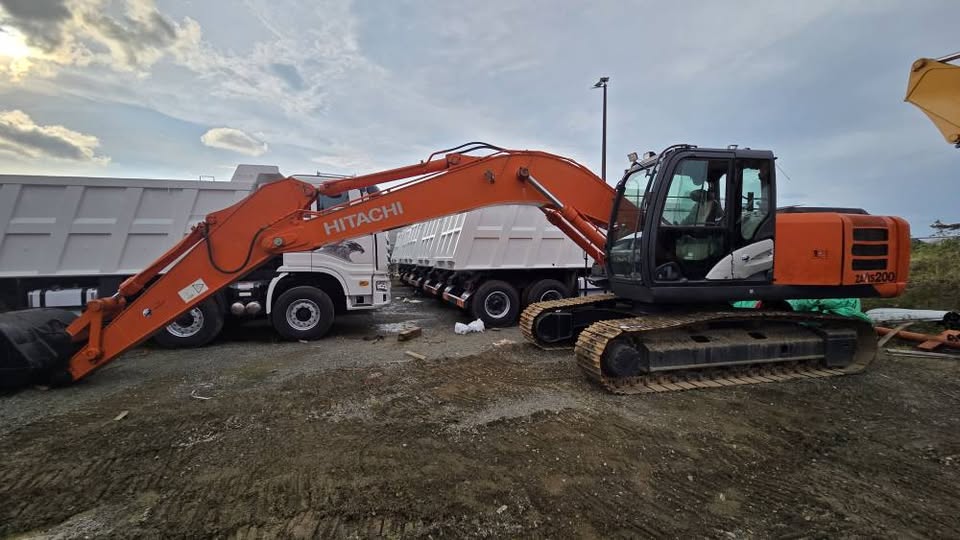
How to choose between a Hitachi 20-ton excavator (ZX200/ZX210 class) and a CAT 20-ton (320-class)—parts, resale, price, hydraulics feel, and which fits your site.
Last updated: November 14, 2026 Buyers often ask the same short question: Hitachi 20 ton or CAT 20 ton? In the used trade that usually means a Hitachi ZX200 / ZX210-class machine versus a CAT 320-class machine. Same size band. Different ownership story. Neither badge wins by itself. The right pick depends on parts around your site, how you dig, what you will pay today, and what you can sell later. What each label usually means CAT 20-ton almost always points at the 320 family—320, 320B/BL, 320C/CL, 320D, 320 GC, 320 GX—roughly the 20–22 tonne class for road work, site dig, trench, and truck loading. For generation detail, see our CAT 320-series comparison and how to buy a 20-ton CAT excavator . Hitachi 20-ton usually means ZX200 / ZX210 (and close variants). Same job size: general earthmoving and truck loading, with a large Japan and Asia used supply that many export buyers already know. Before you compare price, lock the plate letters. “20 ton digger” in a WhatsApp title is not a model. Side-by-side for buyers Hitachi ZX200 / ZX210 class CAT 320-class Size band ~20–22 t typical used configs ~20–22 t typical used configs Common used names ZX200, ZX210, ZX200-3/5, ZX210LC… 320, 320B/BL, 320C/CL, 320D, 320 GC/GX Buyer strength Often sharper purchase price; smooth hydraulic feel; thick Japan-used stock Strong brand recognition; familiar controls; residual demand in many markets Common risk Thin local Hitachi parts shelf can erase a cheap yard price in downtime You may pay a badge premium; later electronic generations punish dirty fuel Best fit Sites with Hitachi tech habit or reliable Japan/Asia parts path Sites with Cat workshops, operators, or resale buyers who ask for CAT first Decision filter 1: parts and workshop Start here, not with paint. Choose CAT when filters, undercarriage talk, and mechanics around you already live on Cat iron—or when project buyers expect a CAT badge. Choose Hitachi when your market has ZX200/210 stock, technicians who know the platform, and a parts path you can trust for swing, pump, and undercarriage. A cheaper Hitachi that sits waiting for a seal kit is not cheaper. A dearer CAT that digs next week can be the calmer invoice. Decision filter 2: purchase price vs resale On many used export lists, a workable ZX200/ZX210 asks less than a similar-condition 320-class CAT. CAT often holds stronger residual recognition where dealers and contractors treat the yellow badge as the safe default. Ask yourself: are you buying to keep and dig, or to keep and flip? Keep-and-dig can favor Hitachi value. Keep-and-flip or corporate shortlists often lean CAT—if condition matches. For CAT 320CL price bands specifically, see the used CAT 320CL global price guide . Decision filter 3: how it digs Operators who know Hitachi often praise smooth, precise hydraulics —useful for trench, drainage, and careful loading. Crews raised on CAT often stay on CAT for control feel and residual habit. Training cost is real money even when nobody puts it on the quotation. If your operators already know one pattern, switching brands for a small yard discount can cost more in the first month than the badge difference. Decision filter 4: fuel and electronics era Both brands sell older simple platforms and later electronic machines. Match the generation to your diesel quality and workshop: Uneven fuel + field repairs → prefer simpler, well-kept older generations on either badge. Clean diesel + code-capable support → later electronic platforms are easier to live with. Do not treat “Hitachi” or “CAT” as a fuel-system answer. Treat the engine family and service history as the answer. When to choose CAT 320-class Buy CAT when: local Cat parts and mechanics are thick; resale or project paperwork favors CAT; your crew already runs Cat controls; you want the deep used market documented in our 20-ton CAT buying guide . Skip a CAT listing when: the only advantage is the badge and the undercarriage is finished, the pump is weak, or the plate does n...