Excavator Electronic Injection vs Direct Injection: Pros, Cons, Buying Reality
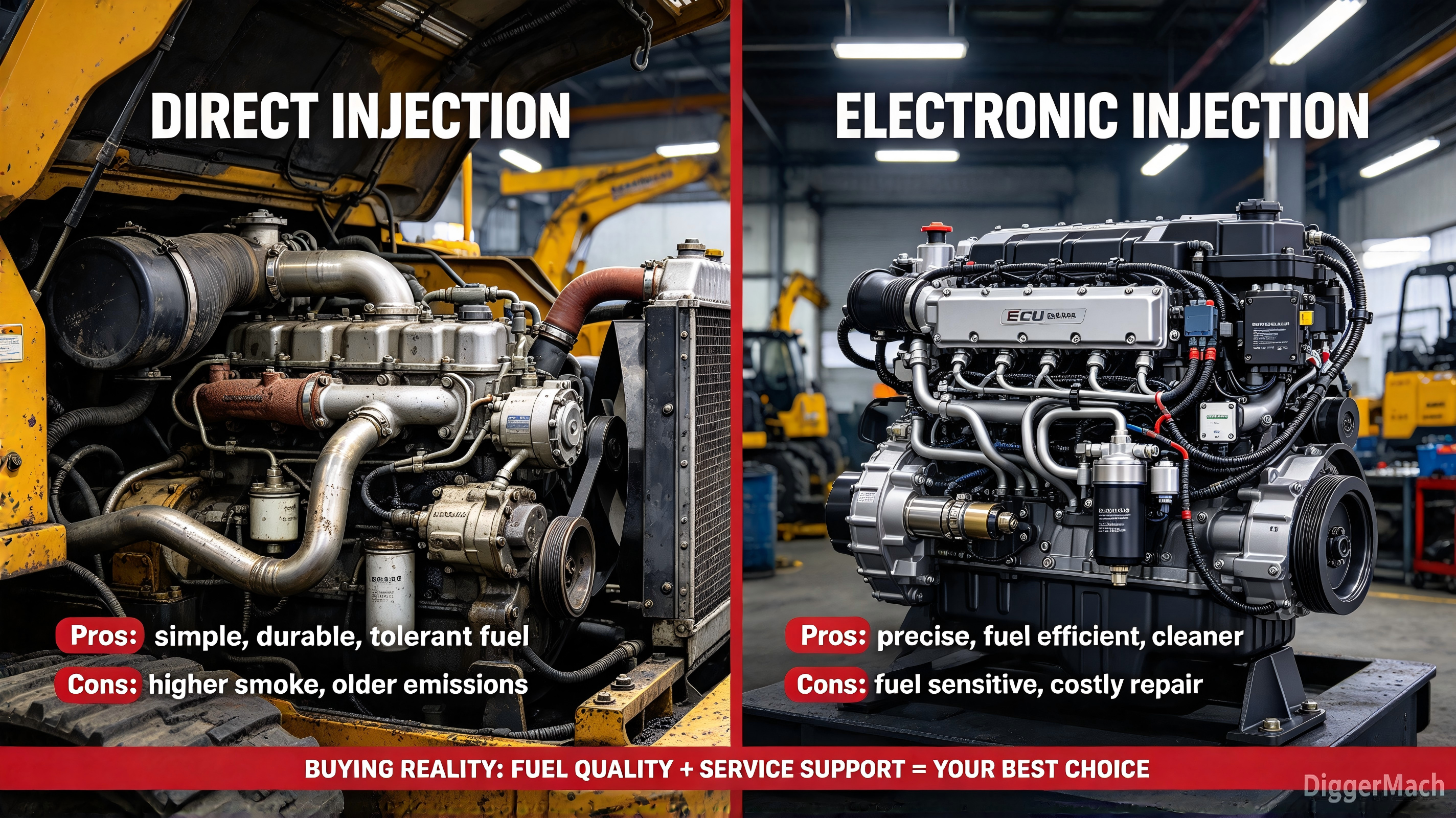
What electronic fuel injection and direct injection mean on excavators, their real upsides and failure costs, and how to choose on a used machine—not by the buzzword in the listing title.
Used excavator ads love two labels: electronic injection and direct injection . They sound like rival products. On diesel excavators they usually are not. Direct injection is about where fuel is sprayed. Electronic injection is about how timing and quantity are controlled. Plenty of later machines are both—common-rail diesels that inject into the cylinder under electronic control. If you are comparing a used excavator for real work, stop treating the two words as a beauty contest. Compare the fuel system you can support against older mechanical-pump machines, and price the repair risk honestly. What buyers should mean by each term Direct injection (DI): fuel enters the combustion chamber. Healthy DI generally burns more efficiently than older pre-chamber layouts. Electronic injection: an ECU helps decide fuel delivery instead of relying only on a mechanical pump rack. Mechanical pump: simpler control, still common on high-hour used excavators where workshops and diesel quality vary. Electronic injection: upsides and costs Why people want it — finer fueling, often better consumption and cleaner running when filters and fuel are clean; smoother idle and cold start on many platforms; fault codes can protect the engine if the electrical side still works. What bites later — dirty diesel and water are expensive; injectors, pumps, rails, and ECUs are not backyard-cheap; harness and sensor faults create limp mode and downtime; you need someone who can read codes, not only “adjust the pump by ear.” Direct injection: upsides and costs Why it matters — strong combustion efficiency potential and solid power density for digging and truck loading when the injection kit is healthy. On most modern mid-size excavators, DI is simply the normal layout. What bites later — high pressure hates contamination; worn injectors show up as rough idle, smoke, hard start, or rising fuel burn; when a pump or a set of injectors goes, the invoice jumps fast. So which is better on a used excavator? Neither label wins by itself. Choose modern electronic / DI platforms when fuel is clean, filtration is disciplined, and a competent shop is available. Keep a well-kept mechanical-pump machine in play when diesel quality is uneven and field repairs must stay simple—accept more smoke and usually worse fuel use. A neglected electronic direct-injection excavator with water in the tank loses to a boring, well-serviced older unit every time. Checks that matter more than the label Cold start, idle, smoke under load Filter / water-separator history; any injector or pump invoices Active codes if the machine can be scanned What fuel it actually ran on recently Then do the normal iron check—undercarriage, pins, hydraulics. Engine buzzwords do not fix worn rails. For a model-level walk-around, see our notes on used CAT 330BL excavator specs, hours, and price drivers . FAQ Is every electronically injected excavator also direct injection? Often on newer diesels, but not by definition. Ask for engine model and system type (mechanical, electronic unit pump, common rail), not only the ad slogan. What kills electronic / DI excavator engines fastest? Contaminated fuel, skipped filters, water, and running on unresolved injector or rail-pressure faults. On Diggermach, when you shortlist excavators , ask for engine family, injection type, recent fuel-system work, and a cold-start clip. That is more useful than arguing about electronic versus direct injection in the title. Need the definitions side by side first? Read electronic injection vs direct injection on used construction machinery: the real difference .